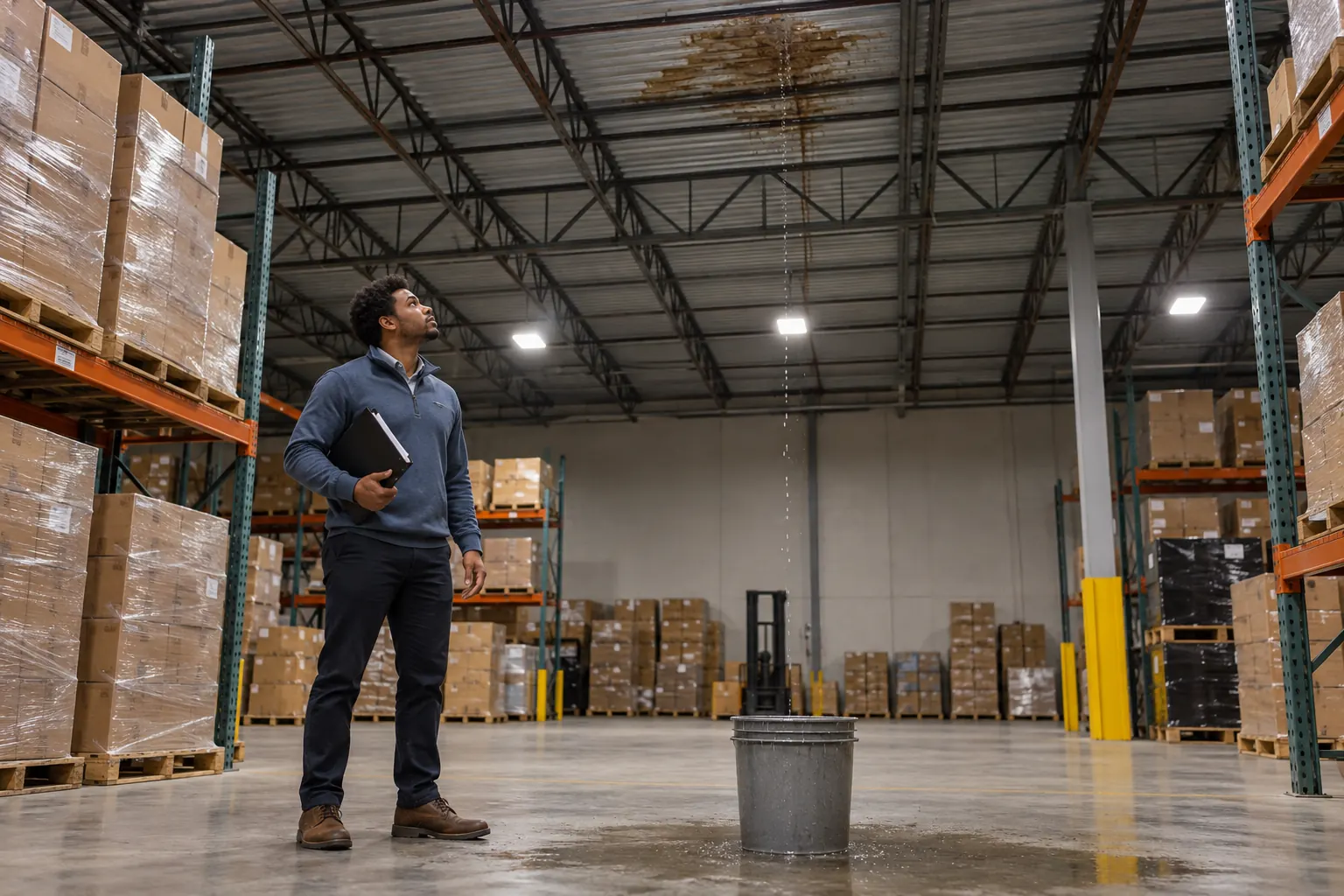
Facility manager looking up at a roof stain dripping into a bucket in a Glendale warehouse
West Valley Roof Repair

Glendale Commercial Roof Repair

Glendale commercial roof repair for flat, metal, foam, and industrial roofs, from a split seam over a warehouse to a cracked curb on a downtown storefront.

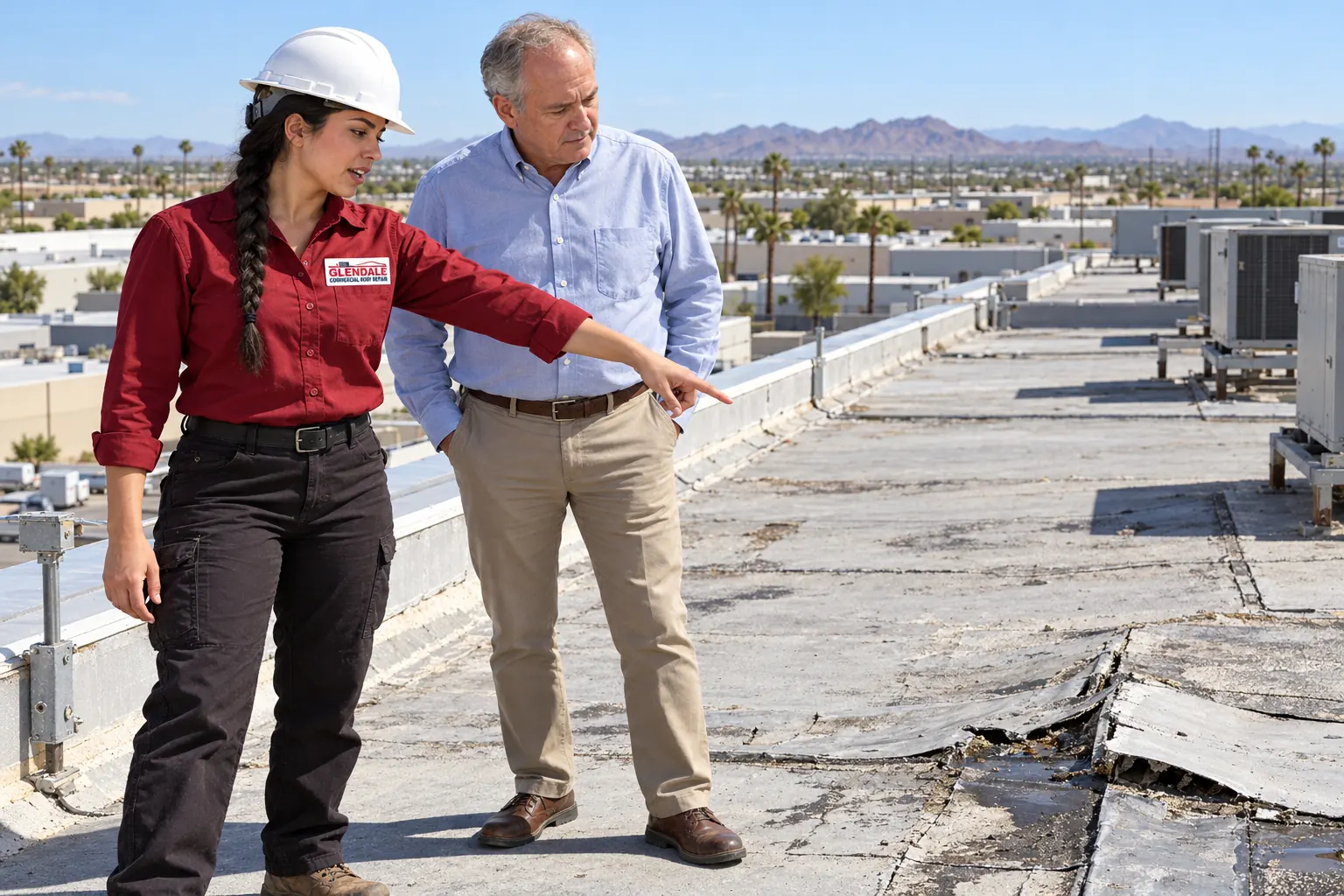
Roofer pointing out a split, lifted seam on an aged flat roof to a Glendale building owner
  • First Step

    A roof walk before any repair

  • Roofs We Repair

    Flat, metal, foam, and industrial

  • Monsoon Season

    June 15 to September 30

  • Coverage

    Glendale plus six West Valley towns

Roof Zones

Where Leaks Start On A Flat Roof

Most flat roof leaks start where the membrane meets something else. These are the five places we check first on a Glendale roof.

  • Edges And Parapets

    Coping joints crack and wall flashing pulls away after years of afternoon heat. Water slips behind the flashing and runs down inside the wall, so the stain often shows up along an exterior wall.

  • Field Seams

    Heat-dried seams open first on aged TPO and modified bitumen. A probe finds the loose spots, and each one gets a matching patch welded, taped, or re-plied to the sheet around it.

  • Drains And Scuppers

    Monsoon dust packs strainers and overflow scuppers, so rain backs up and sits against weak laps. Clearing the drain comes first, then resealing the clamping ring or scupper sleeve.

  • Rooftop Units And Pipes

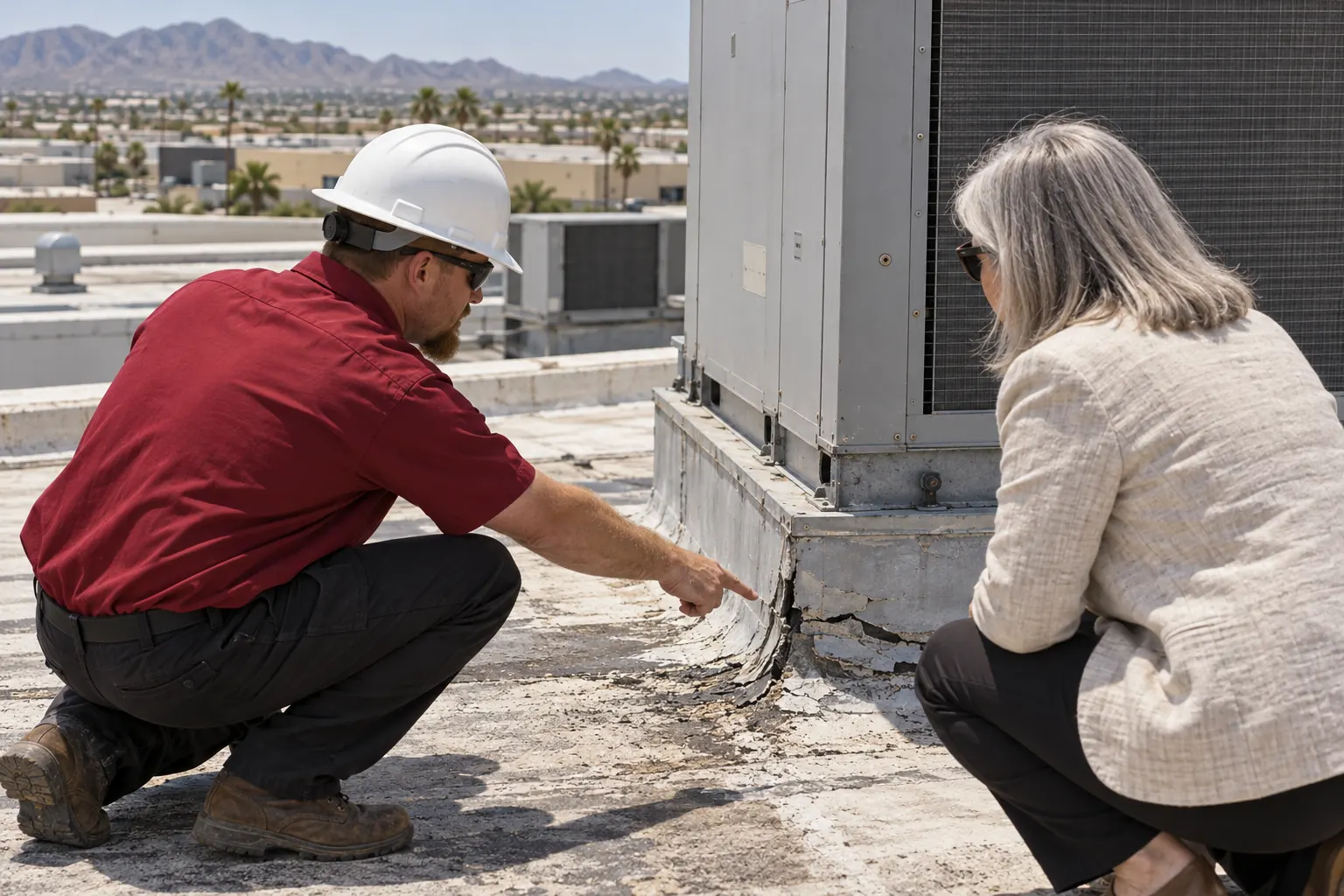
    Base flashing at HVAC curbs splits as it dries out, and shrunken sealant at pipe boots and pitch pans leaves gaps you can slide a fingernail into.

  • Deck And Insulation

    Once water gets under the membrane, insulation soaks it up and the deck starts to rust or soften. A moisture meter shows how far it spread before anything is cut out.

Repair Services

Four Ways We Repair Commercial Roofs

Pick the service by the roof you have and where the water shows up.

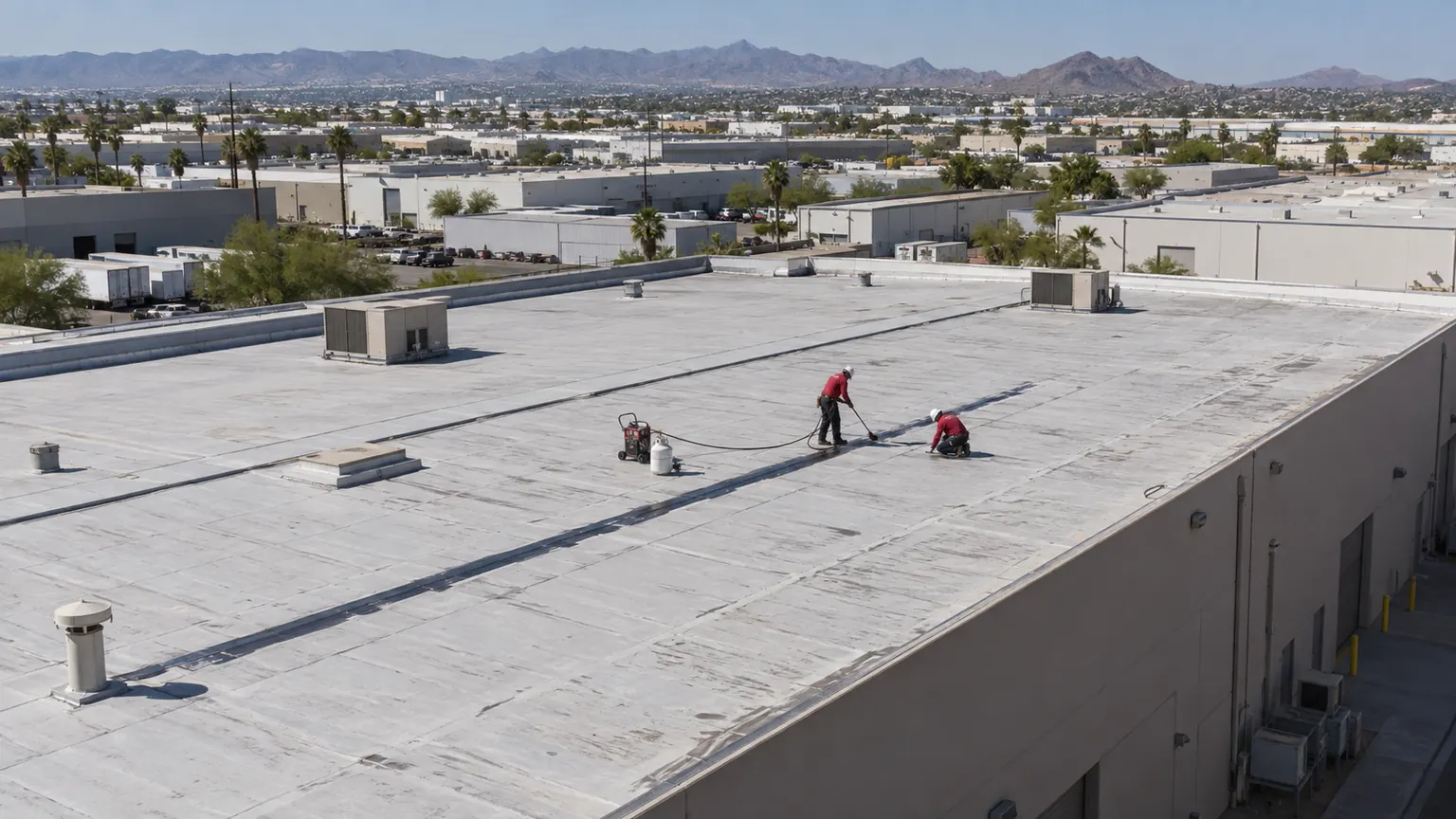
Two roofers welding a long seam on a large white flat roof

Flat Roof Repair

Works on: seams, drains, curbs, flashing, deck.

TPO, EPDM, modified bitumen, built-up, and spray foam roofs on Glendale warehouses and storefronts. Each patch is made from the same material as the sheet around it, so it stays tight through the daily heat swing.

See flat roof repair in Glendale
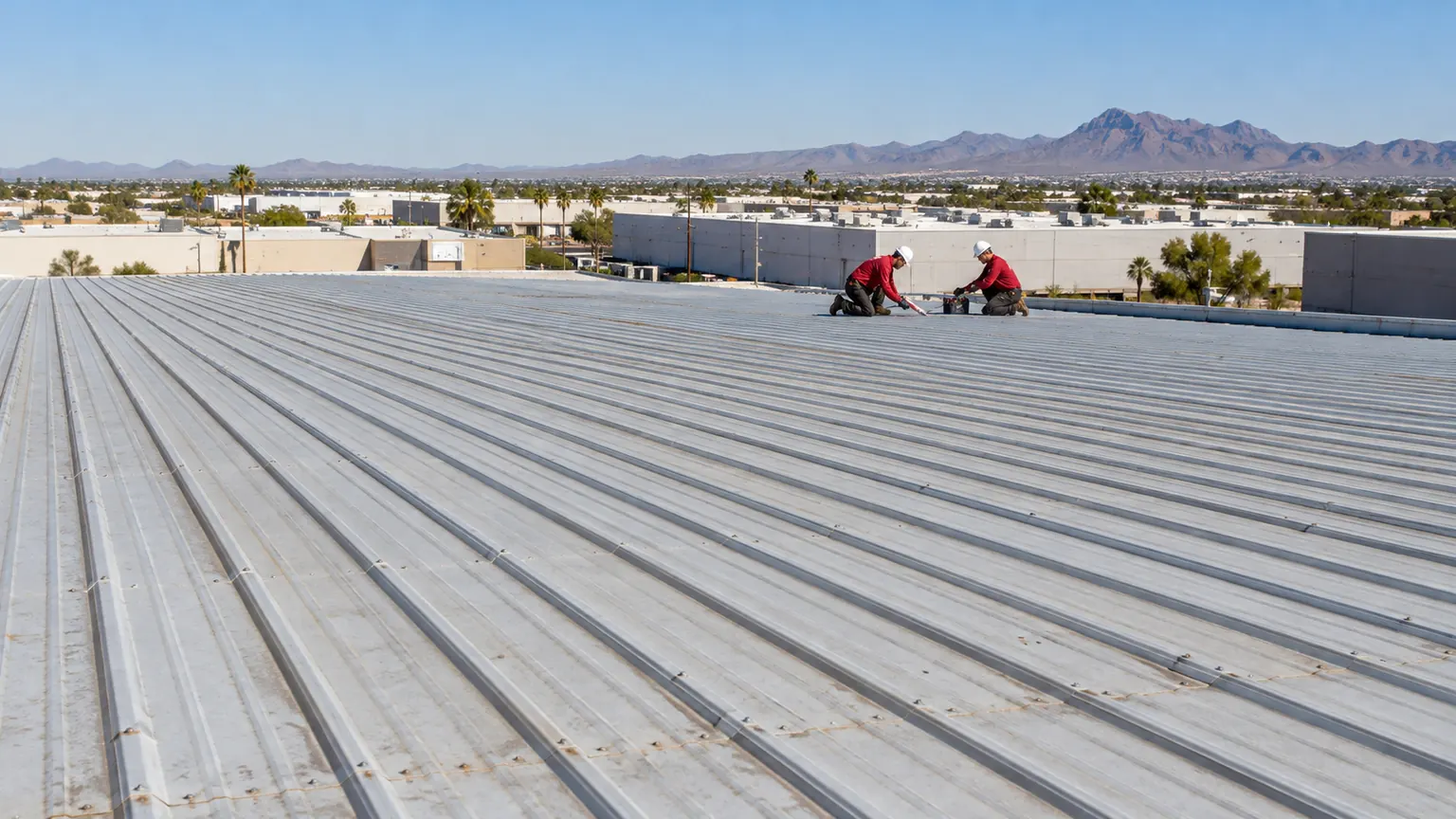
Two roofers sealing a panel lap on a ribbed metal roof

Commercial Metal Roof Repair

Works on: seams, fasteners, flashing.

Screw-down and standing-seam panels on shops, plants, and storage buildings. We replace backed-out fasteners with oversized screws, reseal panel laps, and treat rust bloom before it eats through the steel.

See commercial metal roof repair
Roofer pointing at cracked base flashing on an HVAC curb

Commercial Roof Leak Repair

Works on: seams, drains, curbs, flashing.

Ceiling stains that keep coming back. We start above the stain, follow the water upslope to the real opening, and fix that detail instead of patching the spot where it drips.

See commercial roof leak repair
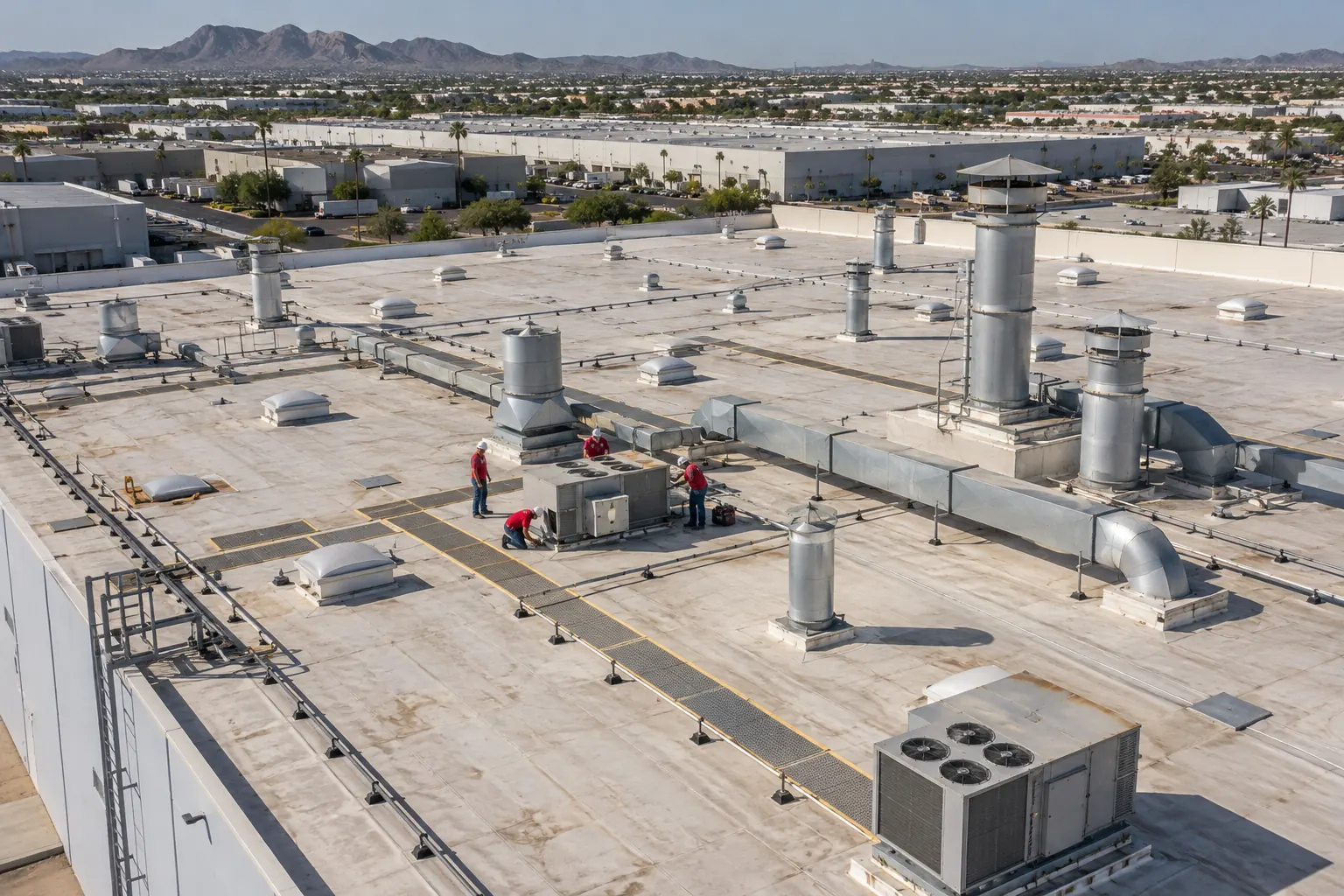
Roofers working at a rooftop unit among exhaust stacks and walkway pads on an industrial roof

Industrial Roof Repair

Works on: seams, curbs, flashing, deck.

Plant and distribution roofs with exhaust fans, process vents, and wide spans. Repairs are planned with your facility manager so fans get shut down or shielded and work zones fit around shifts.

See industrial roof repair
Benefits

What Early Repairs Protect

A small repair done before the next storm keeps water out of the parts of a building that cost the most to replace.

  • Warehouses along Loop 101
  • Parapet-walled storefronts downtown
  • Recreation centers
  • Plants with exhaust fans
  • Dry Insulation

    Wet insulation under a small area can be cut out during a repair. Left through a monsoon season, the wet area spreads and turns a patch into a section replacement.

  • A Solid Deck

    Steel decks rust and wood decks soften when water sits on them. Fixing the opening early keeps the deck firm enough to hold a membrane.

  • Planned Timing

    Repairs scheduled in spring or fall avoid the rush after the first monsoon storm, when water is already on the floor.

  • Stock And Equipment

    Every closed seam over a rack of pallets or a production line is one less bucket, tarp, and cleanup inside the building.

Before You Call

Ceiling Tile Dripping Again?

Call us and tell us what you're seeing. A few details help us find the opening faster on the roof.

What To Note Before You Call
  • Where the stain or drip shows inside
  • When it leaks: every rain, or only hard storms
  • How we reach the roof: hatch, ladder, or lift
Repair Or Replace

Repair It Or Replace It?

Most roofs we look at still have a repair in them. These signs show which side of the line your roof is on.

Repair Holds

  • Leaks trace to a few seams, curbs, or flashings
  • Wet insulation is limited to a small area
  • The membrane still bends without cracking
  • The deck feels solid underfoot near the leak
  • Most of the roof has years of life left

Plan A Replacement

  • Water has soaked insulation across large areas
  • The deck is rusted through or soft
  • The membrane cracks when folded
  • Leaks open in new spots each season
  • Each new patch buys less time than the last
Repair Process

From Stain To Sealed Roof

Five steps, in the same order on every roof, so the patch goes on the real opening.

  1. Inspect Your Roof

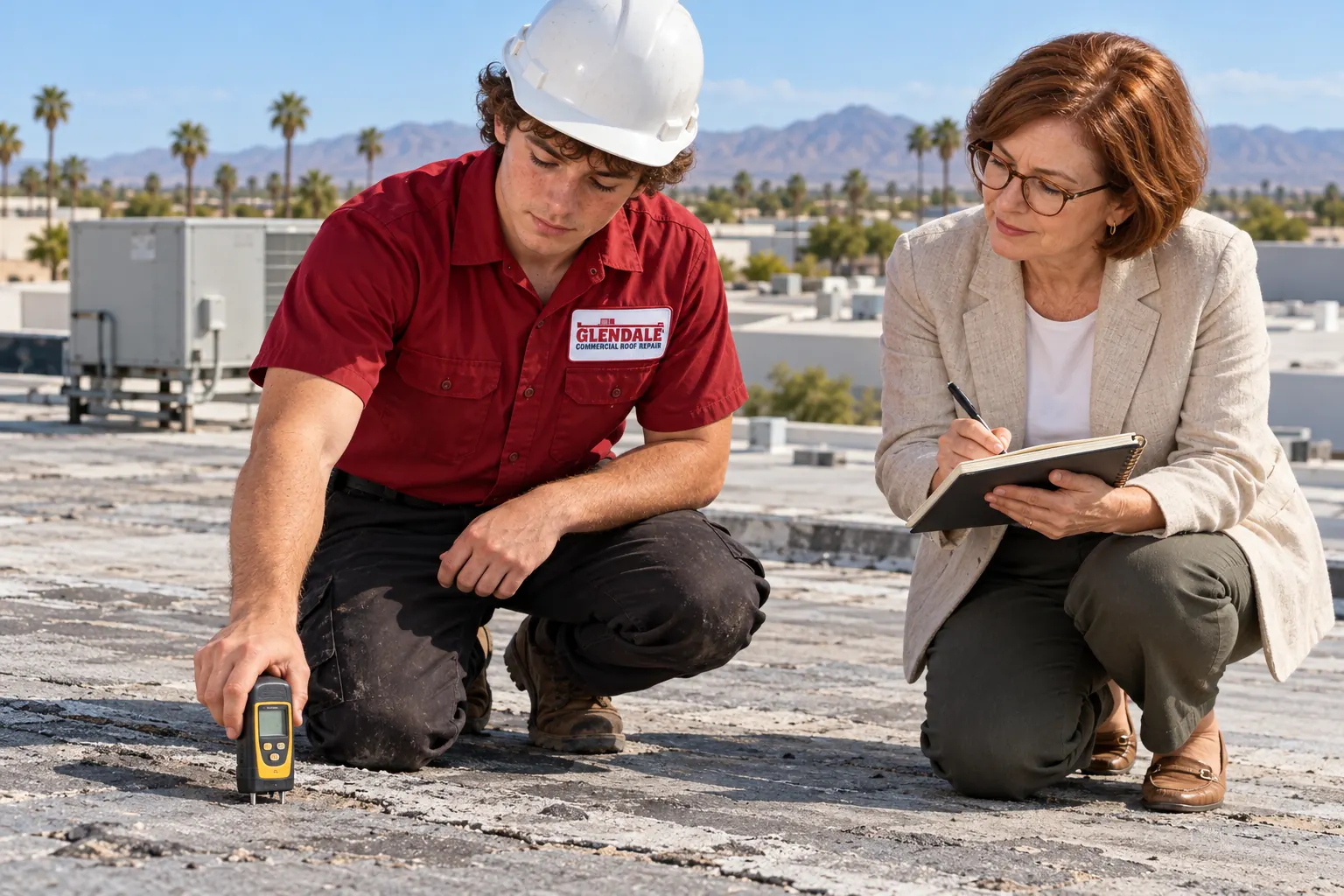
    We walk the roof with a moisture meter, check seams, curbs, drains, and flashings, and match what we find to the stains inside the building.

    Roofer checking an aged flat roof with a moisture meter while a facility manager takes notes
  2. Trace The Water

    Water rides deck flutes and insulation joints before it drips. We work upslope from the stain and test one section at a time until the entry point shows.

  3. Dry It In

    If rain is coming, a temporary seal goes on first: a cleared drain, a taped seam, or a covered tear, so water runs off while the cause gets fixed.

  4. Repair The Detail

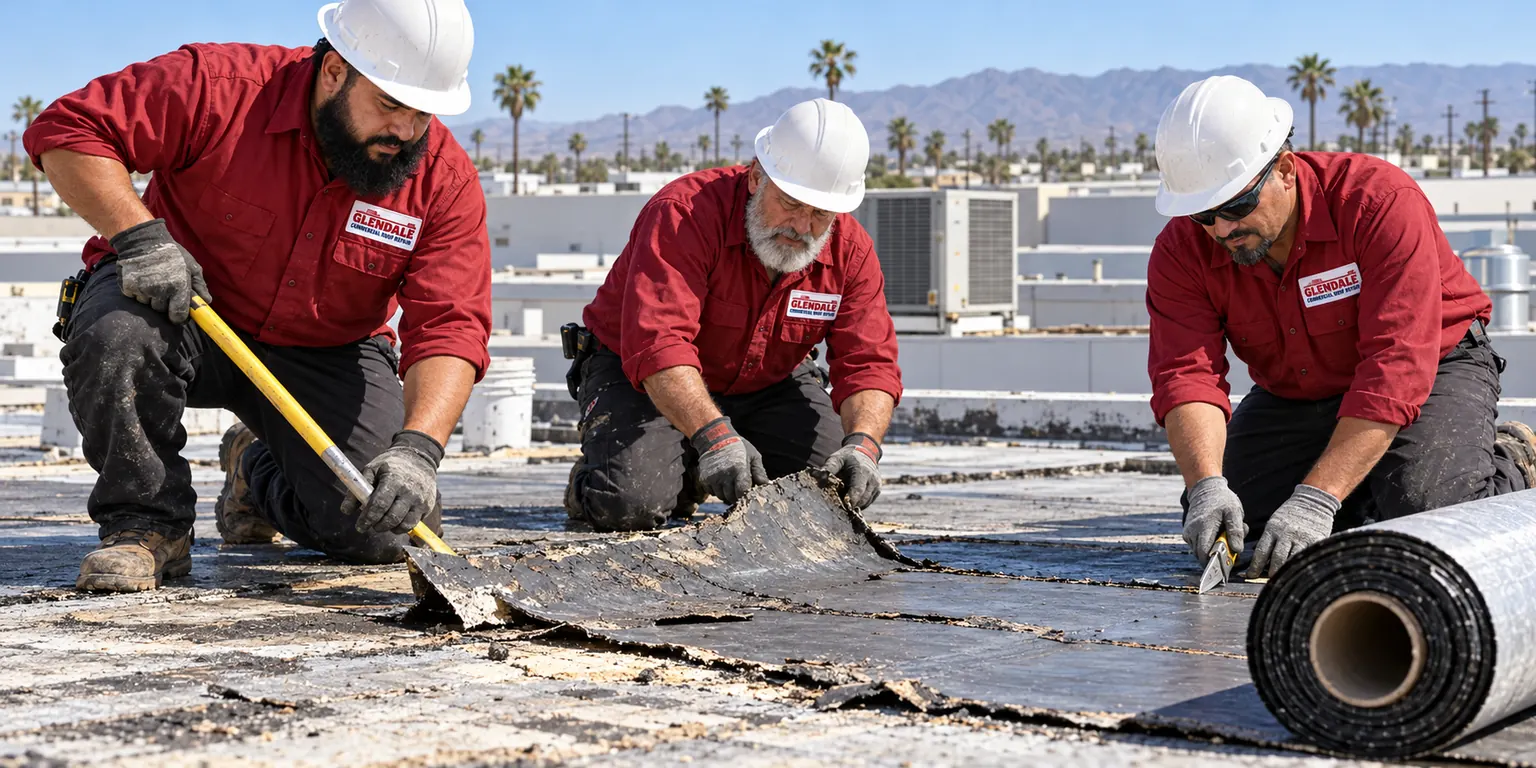
    Wet insulation is cut out and replaced, and the opening gets a patch that matches the roof: heat-welded TPO, taped EPDM, new plies, or refilled foam.

    Three roofers cutting out torn modified bitumen and unrolling a new roll on a Glendale roof
  5. Recheck After Rain

    After the next storm we look at the repaired spots and the ceiling below, and mark any ponding rings that sit on the new work.

Service Area

Glendale And Six West Valley Towns

We repair commercial roofs in Glendale and the six towns along Grand Avenue and Loop 101 to the northwest.

Schematic map, not to scale: Glendale and the West Valley towns served, drawn on the arterial street grid with Grand Avenue (US 60), Loop 101, Loop 303, and the Agua Fria River.Dysart RdEl Mirage Rd111th Ave99th Ave75th Ave59th AveBell RdThunderbird RdPeoria AveOlive AveNorthern AveGlendale AveGlendalePeoriaSun CityYoungtownEl MirageSurpriseSun City WestGrand Ave (US 60)Loop 101Loop 303Agua Fria RiverNNot to scale
  • Glendale

    Home city, along Grand Ave and Loop 101

    Warehouse roofs along Loop 101 and parapet-walled storefronts downtown, with permits from City of Glendale Building Safety.

  • Peoria

    North of Glendale, where US 60 meets Loop 101

    Spray foam roofs pecked by birds and browned by sun get cut out, refilled, and recoated, with permits through the online portal.

  • Sun City

    Northeast of Grand Ave, east of Youngtown

    Recreation-center and shopping-center roofs with dust-packed drains and scuppers, permitted through Maricopa County.

  • Youngtown

    On 111th Ave, between Sun City and the Agua Fria River

    Older modified bitumen and built-up roofs repaired with cold-applied plies beside occupied buildings.

  • El Mirage

    West bank of the Agua Fria, with Grand Ave through town

    Skylights, smoke vents, and roof hatches on shop roofs, with a call to the city permit center to confirm scope.

  • Surprise

    Northwest along Grand Ave, around Sun City West

    Repairs that grow into section replacements when wet insulation or a soft deck turns up under the patch.

  • Sun City West

    Northeast of US 60, south of Loop 303

    Parapet coping and wall flashing on stucco buildings, where community roof-color rules can add an approval step.

Questions

Glendale Commercial Roof Repair Questions

Short answers to the questions Glendale owners ask before a repair.

How hard is Glendale's weather on a commercial roof?

Hard enough that most repairs trace back to heat or monsoon storms. Summer highs regularly pass 100°F, and the swing to cooler nights stretches seams and dries sealant at curbs.

From June 15 through September 30, monsoon storms push dust into drains and drop heavy rain on those weak spots.

Do you repair foam roofs?

Yes, as part of flat roof repair in Glendale. Damaged foam is cut out, the cavity is refilled with new foam or sealant, and the patch is recoated. Large water-soaked areas need a bigger section removed first.

Can a repair wait until after monsoon season?

Small openings can wait a few weeks under a temporary seal, though a spring repair before the storms is safer. An open seam that lets water reach the insulation in July and August spreads the wet area, and the repair grows with it.

What should I have ready for the inspection?

Roof access and a list of where stains show up inside. A hatch key or a place to set a ladder saves time, and photos of the ceiling after a storm help match each stain to a spot on the roof.

Will you tell me if the roof needs replacing instead?

We will. When water has reached the deck or soaked insulation across large areas, patching buys little time, and we say so with the moisture readings in hand. Most roofs still have a repair in them, so that call comes after the inspection.

Do you work on the building while it's open?

Most repairs happen with the building open and running. Materials are staged away from entrances and dock doors, and work near rooftop intakes is timed with the facility manager.

Next Step

Get Your Glendale Roof Repair Started

Request a free estimate online or call us. We'll set up a roof walk and explain what needs repair now and what can wait.

Call (623) 310-0166